
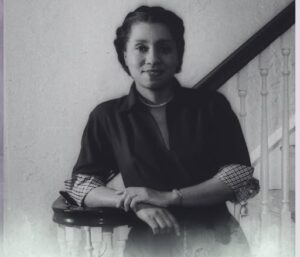
 She sat at the front of every classroom, not because she loved the front row, but because it was the only way to avoid seeing the faces of classmates who didn’t want her there.
She was the only Black woman in a class of 137 medical students.
Her name was Helen Octavia Dickens, and she had no intention of being pushed out.
Her father had been born enslaved.
As a boy, he served as a water carrier during the Civil War, and afterward, a Union colonel took him in and raised him.
He was brilliant, self-taught, and could hold his own reading the law.
But the world he lived in had already decided what jobs a Black man could hold, so he spent his life doing janitorial work regardless of his mind.
He and his wife made a decision early on.
Their daughter would get an education no one could take from her.
Helen took that promise seriously.
She enrolled at the University of Illinois College of Medicine, determined to become a doctor in a world that had barely made room for her.
Graduating in 1934, she was the only African American woman in her entire class.
She didn’t graduate to applause.
She graduated into a profession that still didn’t know what to do with her.
She began her residency at Provident Hospital in Chicago, then moved into obstetrics and gynecology, a field she would shape for the rest of her life.
In 1943, she married a fellow physician, Purvis Henderson, and the two of them kept building their careers side by side.
By 1948, she was back in Philadelphia, now director of the Department of Obstetrics and Gynecology at Mercy Douglass Hospital.
Two years later, in 1950, something happened that had never happened before.
At a formal ceremony in Boston, Helen Octavia Dickens was named a Fellow of the American College of Surgeons.
She was the first African American woman in history to earn that distinction.
It wasn’t a symbolic title.
It meant the highest levels of American surgery had to formally recognize her as one of their own.
But Dickens didn’t treat it as a finish line.
She treated it as a starting point.
Throughout her practice, she kept noticing the same pattern.
Young women, especially poor women and women of color, were dying from conditions that could have been caught early.
Cervical cancer was one of them.
At the time, a new test called the Pap smear could detect it before it became fatal, but almost no one in low-income Black communities had access to it.
Dickens decided to change that herself.
She began visiting churches throughout Philadelphia’s Black community, performing Pap smears for free, one woman at a time.
She believed access to that single test could save lives, and she was right.
Her advocacy helped push the test further into mainstream use, saving lives far beyond the women she personally examined.
She also opened a clinic specifically for pregnant teenagers and young mothers, understanding that shame and stigma were often more dangerous than the pregnancies themselves.
Then, in 1969, she took on a new role that would define the second half of her career.
She became associate dean of the Office for Minority Affairs at the University of Pennsylvania’s medical school.
At the time, only a handful of minority students were enrolled there.
Dickens didn’t wait for the numbers to improve on their own.
She personally reached out to prospective students, recruited across the country, and rebuilt the pipeline into Penn’s medical program from the ground up.
Within five years, minority enrollment jumped from just three students to sixty-four.
That wasn’t a small shift.
It was a complete transformation of who got to walk through the doors of one of the most prestigious medical schools in the country.
Helen Octavia Dickens spent her career being told, in one way or another, that she didn’t belong.
At the front of a hostile classroom.
At the entrance to a surgical fellowship that had never let a Black woman in before.
At the gates of a medical school that had almost no room for students who looked like her.
Every single time, she didn’t ask for the door to be opened.
She opened it herself, and then she held it open for everyone who came after.
Leave a Reply
You must be logged in to post a comment.