
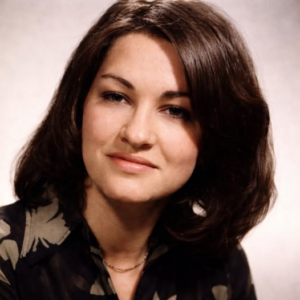
 The Bronx. 1962.
A little girl had just been told her body was at war with itself. Type 1 diabetes. Back then, that diagnosis carried a quiet, devastating warning: most children with this disease were not expected to live past 50.
Her father’s hands shook too badly from alcoholism to hold a needle. Her mother, a nurse, worked double shifts before sunrise and came home too exhausted to speak.
So one morning, without being asked, without waiting for permission, the seven-year-old dragged a kitchen chair to the stove.
She filled a pot with water. Lit the burner. Dropped the glass syringe in to sterilize it — because that’s how it worked in 1962. No disposable needles. No quick finger-prick. A razor blade for blood tests. Glass and metal and boiling water.
While she waited, she got dressed. Brushed her teeth. Packed her school bag.
Then she drew the insulin, found a spot on her arm that wasn’t already bruised, pushed the needle in, and pressed the plunger.
Done.
She grabbed breakfast and ran for the bus.
She was seven years old. And she had just decided, quietly and without drama, that her life was not going to be small.
Her father died when she was nine. Books became her escape — especially Nancy Drew, the girl detective who outthought every adult in the room and never asked for permission. She wanted to be Nancy Drew.
Then a doctor told her that detective work — unpredictable hours, physical demands, stress — wasn’t realistic for someone managing diabetes.
One dream, erased in one sentence.
That same evening, she sat in front of the television and watched Perry Mason. The courtroom. The lawyers. The judge at the center of it all, presiding with total authority.
Nobody ever told her a diabetic couldn’t be a judge.
She was ten years old when she told her exhausted, overworked mother: “I’m going to be a lawyer. And then I’m going to be a judge.”
Her mother, just home from another double shift, simply nodded. She had learned not to tell her daughter what was impossible.
Sonia was valedictorian of her elementary school. Valedictorian of her high school. She discovered debate and realized she could build arguments that no one could dismantle. When a guidance counselor suggested she consider Ivy League universities, she quietly asked: “What’s Ivy League?”
She applied anyway.
Princeton said yes.
She arrived in 1972 with one suitcase and her insulin kit, stepping into a world designed for people nothing like her. Classmates who had vacationed in Europe, who dropped references to books and places she’d never encountered. Some wrote letters to the school newspaper questioning whether students like her belonged there at all.
Her first semester grades seemed to confirm their doubts.
She could have gone home. Most people would have.
Instead, she spent an entire summer teaching herself how Princeton students thought, wrote, and argued. She rebuilt herself from the inside out — not to become someone else, but to become a sharper, more powerful version of exactly who she was.
She graduated summa cum laude. Top of her class.
As a Manhattan prosecutor, she went after the drug dealers and murderers who had devastated neighborhoods like the one she grew up in. Meticulous. Relentless. A colleague once called her “one tough” woman after watching her cross-examine a witness — a comment that stung, and was also completely accurate.
Sonia Sotomayor had been tough since she was seven years old and decided not to wait for anyone to rescue her.
In 1992, President George H.W. Bush nominated her to the federal bench. She became the first Hispanic federal judge in the state of New York. Her 1995 injunction ended the Major League Baseball strike, saving a season for millions of fans who had no idea that the judge who saved it had grown up in public housing, boiling syringes before school.
Seventeen years later, President Barack Obama nominated her to the Supreme Court of the United States.
The Senate confirmed her 68 to 31.
The first Hispanic justice in the Court’s history. The third woman ever appointed. The first justice ever to live with Type 1 diabetes.
She was 55 years old. Five years past the age doctors had once quietly feared she might never reach.
Today, Justice Sonia Sotomayor is 71.
She injects insulin multiple times a day. She wears a continuous glucose monitor. She keeps glucose tablets within arm’s reach. She has written children’s books for kids living with chronic conditions, telling them plainly: “It’s something you have to deal with — but you can.”
She still sits on the Supreme Court, shaping the lives of over 330 million people.
The doctors measuring her future in 1962 were using the limits of 1962 medicine. They had no way to measure what they couldn’t see — a little girl standing on a kitchen chair, lighting a gas burner, and making a quiet, unshakeable decision.
She didn’t defeat the disease. She never claimed to.
She just never let it write the ending of her story.
Every morning: the chair. The water. The needle.
And then — every single day — the world.
Leave a Reply
You must be logged in to post a comment.